Playing cards

ARCA52 reworks the fifty-two french playing cards while keeping them fully usable. The language of the cards is reimagined through a series of connections between animal figures and types of milanese architecture. The illustrations are hand-drawn by Raffaella Audiffredi, who signs each card. This gives the object a more artisanal, tangible, and unique quality. Each card becomes a small story.

The animal represents a behavior and a personality.
The architectural element recalls places of social interaction.

The game creates a layout that changes every time you play. Each game forms a small, temporary “city” made of cards, which is rearranged again in the next round. Players recognize themselves in the animals and their behaviors, leading to reflections on how we inhabit public space—on cooperation, orientation, conflict, and coexistence. In this way, the cards are not just a game, but a tool that stimulates dialogue and awareness.

Selected examples below

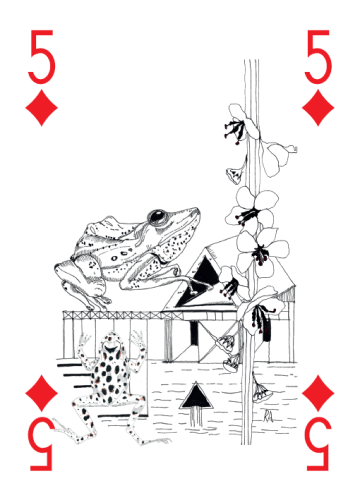
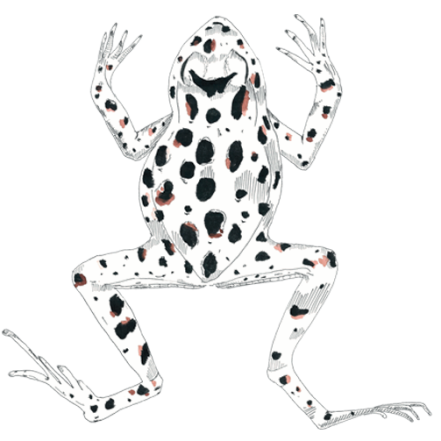
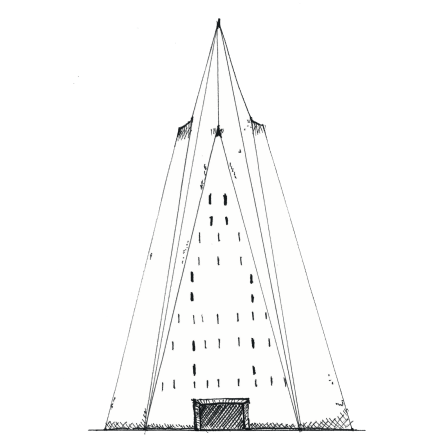
Five of Diamonds

The frog represents rapid adaptation: an elastic presence that alternates between stillness and momentum, able to change direction without losing balance. It speaks of those who move lightly across urban “thresholds,” forming new relationships while remaining ready to move again.

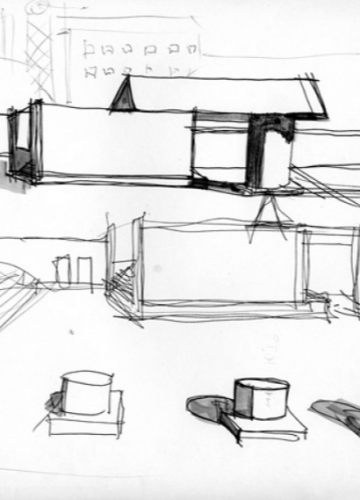
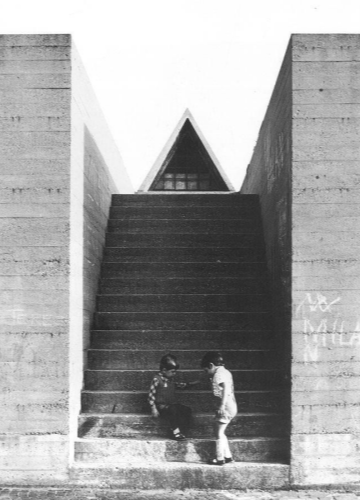
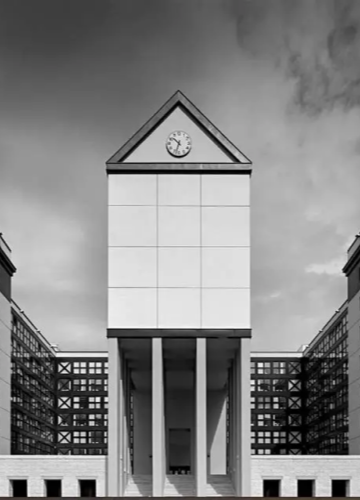
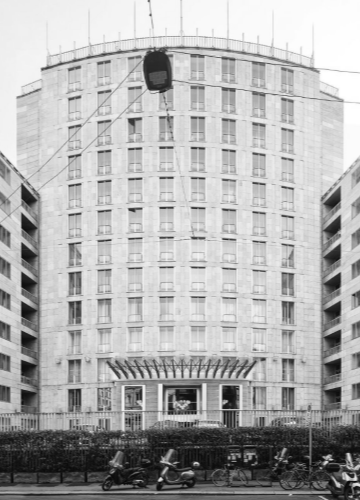
This narrative takes shape in the Monte Amiata housing complex by Aldo Rossi and Carlo Aymonino and monument of Sandro Petrini by Aldo Rossi. The solidity of the architecture becomes the stable counterpart to the frog: it provides order and continuity, while the frog moves through it with agility. Together, they describe a way of inhabiting space shaped by both permanence and transience—an expression of contemporary living.

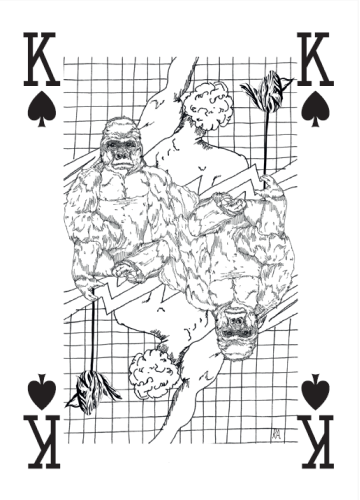
King of Spades

The gorilla embodies sustaining strength: a stable presence that holds the group together without imposing itself. It observes, protects, and moderates, stepping in only when needed, with balance.

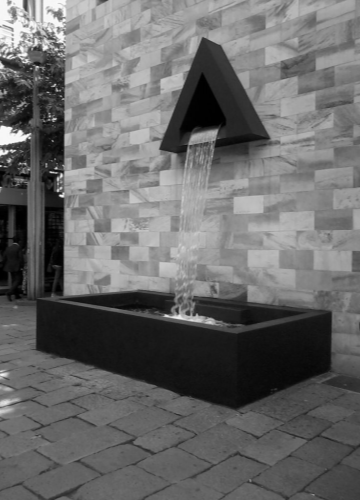
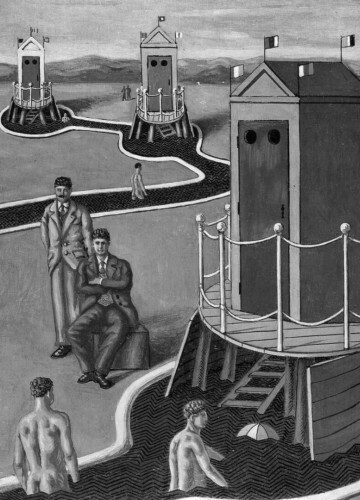
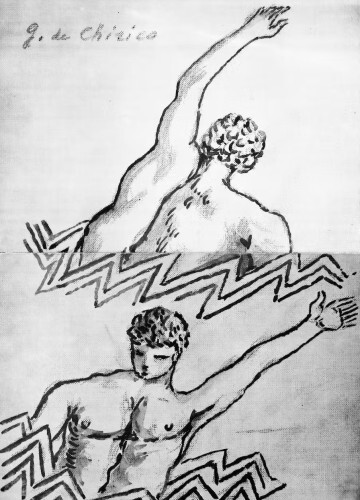
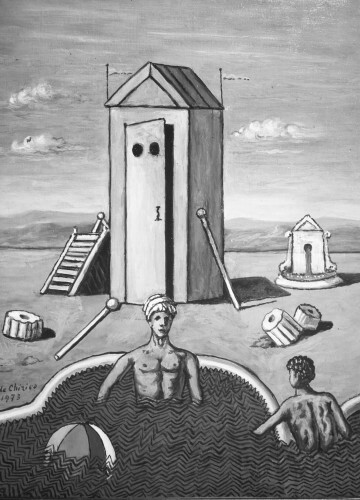
In the city, it represents those who contribute to the cohesion of spaces and to maintaining a harmonious atmosphere. The gorilla quietly reflects in the fountain of the Bagni Misteriosi by Giorgio de Chirico: a space designed for encounter, play, and coexistence—much like the role the gorilla plays within the deck.

Queen of Hearts

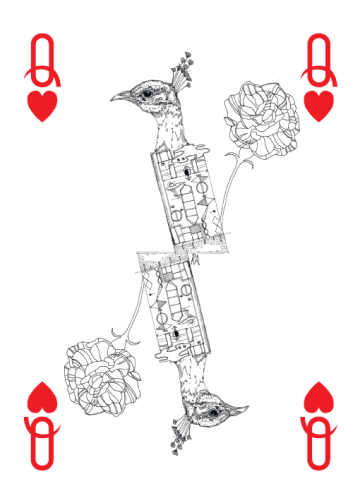
The peacock is a symbol of visibility: it communicates through form, color, and openness, affirming its identity. In an urban context, it represents those who bring quality, care, and character to places, enhancing their recognizability.

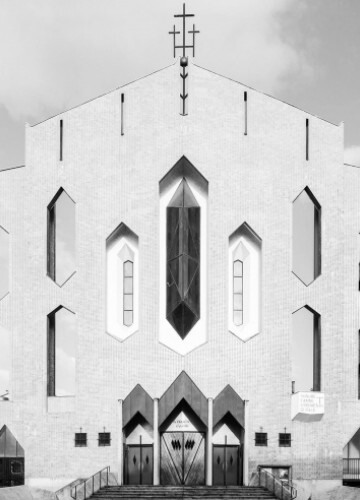
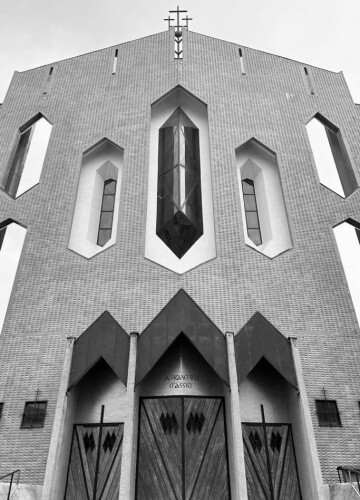
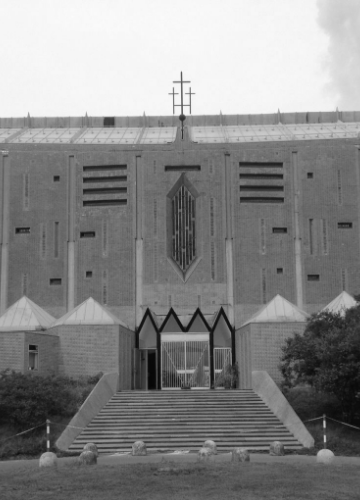
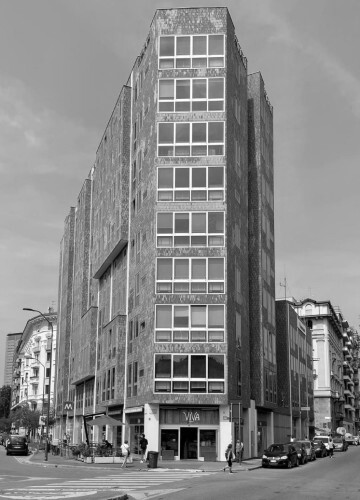
The associated architectural element recalls spaces designed by Gio Ponti, defined by geometry, verticality, and lightness. Like the peacock, this architecture expresses itself through a clear and distinctive language, becoming an unexpected moment of exception within the urban fabric.
Joker

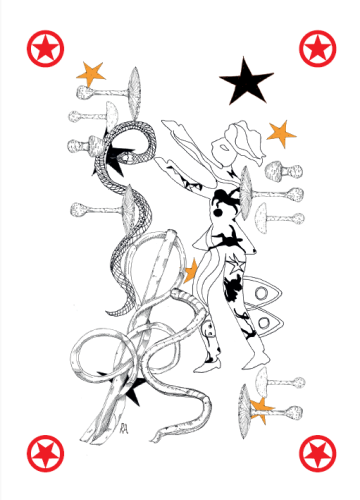
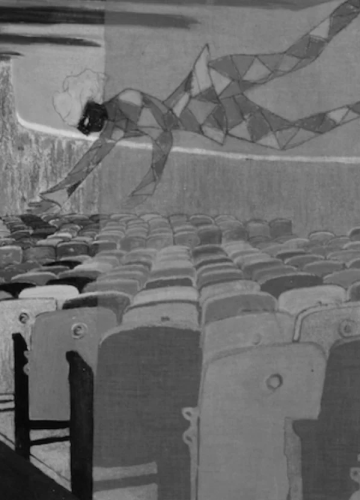
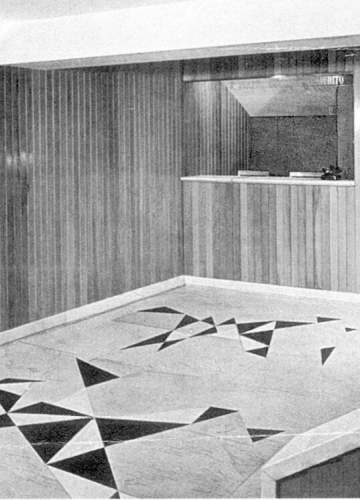
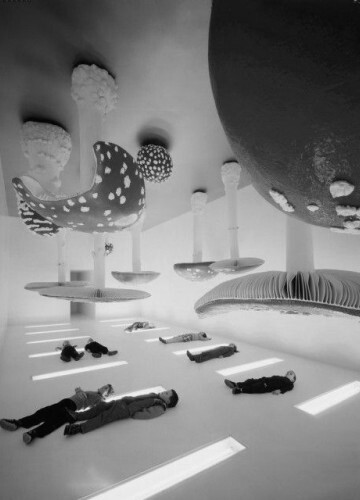
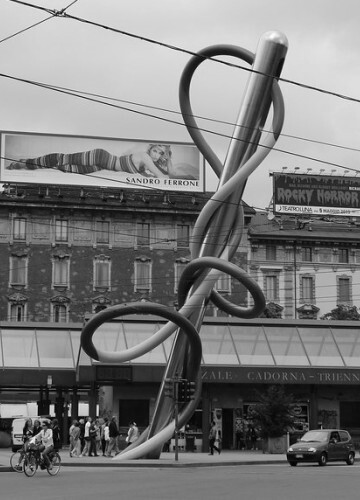
The joker symbolizes the unexpected element that animates the city, crossing roles and creating unforeseen connections. It represents those who transform shared space into a place of exchange and surprise.

Three milanese references embody this idea: Cinema Arlecchino, the Slide and Upside Down Mushroom Room by Carsten Höller, and Ago, Filo e Nodo by Gae Aulenti. Together, they define the joker as the card that reactivates the city—an expression of contemporary urban spontaneity.